Businesses often turn to Business Process Management (BPM) when they want to improve their operations. Although it may sound complicated, BPM is simply about understanding and improving the way work gets done. Whether the task is processing invoices, delivering services, or managing customer requests, BPM helps businesses work smarter, not harder.
In this blog, we’ll explore how understanding key BPM terms can help you achieve goals like improving efficiency, reducing costs, and increasing customer satisfaction.
Extended reading: Streamlined BPM: Integrating Goals, Processes, and Management
What are the goals of Business Process Management (BPM)?
Before we dive into the terms, let’s review the main goals of BPM.
- Increase efficiency by automating repetitive tasks.
- Reduce costs by eliminating wasteful or unnecessary steps.
- Improve accuracy and reduce errors.
- Ensure consistency in how work is performed.
- Provide better customer experiences through smoother processes.
The first step to achieving these goals is understanding the key components of a BPM system.
Extended reading: Understanding the Goals of Business Process Management (BPM)
Activities and business processes
Business Process Management (BPM) focuses on business processes, which are simply tasks that follow a logical order. Each process is made up of smaller steps, or activities.
For example, think of the process of “approving a purchase.” This process might involve several activities, such as:
- Receiving a request
- Checking the budget
- Getting manager approval
Each activity must be clearly defined so that it can be analysed or automated.
Automation rate and Business Process Automation
One way to reach BPM goals is by increasing the automation rate, or the percentage of work done automatically without human effort. For example, if approving invoices is mostly manual, using automation tools can speed up the process and reduce errors.
This is where business process automation comes in. It replaces manual work with technology, helping businesses achieve efficiency and accuracy, two major BPM goals.
Extended reading: The Power of Low-Code in BPM Automation
BPM Systems: The tool that makes it happen
A BPM system is software that helps businesses design, track, and improve their processes. These systems allow companies to:
- Create process maps
- Monitor how tasks are completed
- Automate certain actions
- Find and fix problems
A good BPM system enables teams to work more efficiently and focus on what really matters.
Process discovery and improvement
You can’t improve what you don’t understand. That’s why process discovery is so important. It involves identifying how a task is currently performed, which is sometimes referred to as the “as-is” state. Once that’s clear, teams can look for ways to improve the process.
From there, business process improvement takes over. This involves tweaking existing processes to make them faster or easier. This may include removing unnecessary steps or combining tasks.
Extended reading: Boost Efficiency with AI-Driven BPM Improvement
Process mapping and monitoring
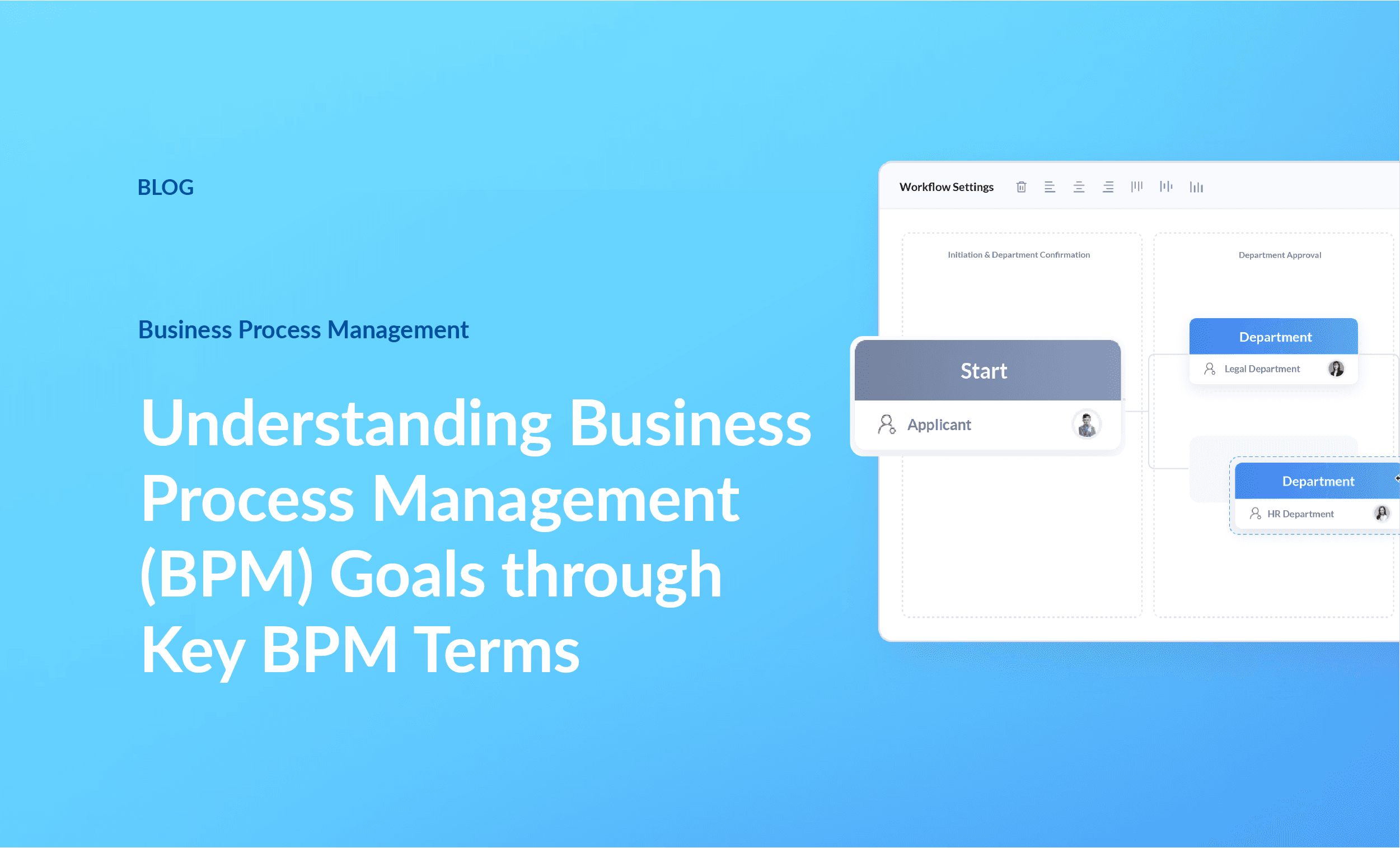
Process mapping is like creating a flowchart of how work happens. It clearly shows each step, which helps everyone understand the process. Once the process is mapped, it can be tracked using monitoring tools to see what’s working and what’s not.
This tracking helps identify the bottlenecks, or slow points, in the process, which is important for achieving BPM goals such as reducing delays and improving performance.
Conformance checking and root cause analysis
BPM uses conformance checking to ensure a process is running as expected. This involves comparing how a task should be done versus how it is done. If there are differences, it’s a sign that something’s not working properly.
Root cause analysis then digs deep to determine why something went wrong. Addressing the root cause, rather than just the symptom, is essential for long-term process improvement.
Process optimisation and reengineering
After identifying problems, the next step is to optimize the process by improving it without changing it completely. This may involve automating steps, simplifying them, or improving handoffs between teams.
Sometimes, however, a process is so outdated that it needs a full makeover. That’s when process reengineering comes into play. Reengineering involves more dramatic changes aimed at making the process completely modern and efficient.
Using data: Process intelligence and process mining
To reach BPM goals, businesses need insights. Process intelligence helps with that. It uses data to determine what’s working and what’s not. With tools like process mining, companies can visualize real process flows and identify areas for improvement.
Process performance metrics allow businesses to track their progress and make informed decisions for improvement.
Enterprise automation and intelligent automation
Enterprise automation takes it a step further. It uses a mix of technologies, such as AI and Robotic Process Automation (RPA) , to handle complex tasks across departments.
This is also known as intelligent automation and not only saves time but also improves accuracy. These automation strategies are essential for achieving BPM goals, especially when scaling operations.
The human side: Documentation and implementation
Processes must be properly documented. Proper business process documentation ensures that everyone knows what to do, when to do it, and how to do it correctly. It also simplifies the onboarding process for new employees and ensures consistency across the team.
Once an improved process is ready, it’s time for implementation. This involves training employees, updating tools, and ensuring everything works smoothly.
Bottom line
Achieving your Business Process Management (BPM) goals doesn’t have to be complicated. By familiarizing yourself with the key terms and techniques and using the right tools, you can help your organization improve process efficiency, reduce manual effort, and achieve better results.
Whether you want to automate repetitive tasks, identify process issues, or optimize workflows, a robust BPM system can support you every step of the way. Are you ready to streamline your business processes?
Book a free demo to see how Weaver BPM can help you achieve your BPM goals faster and more efficiently. Visit our website to learn more.