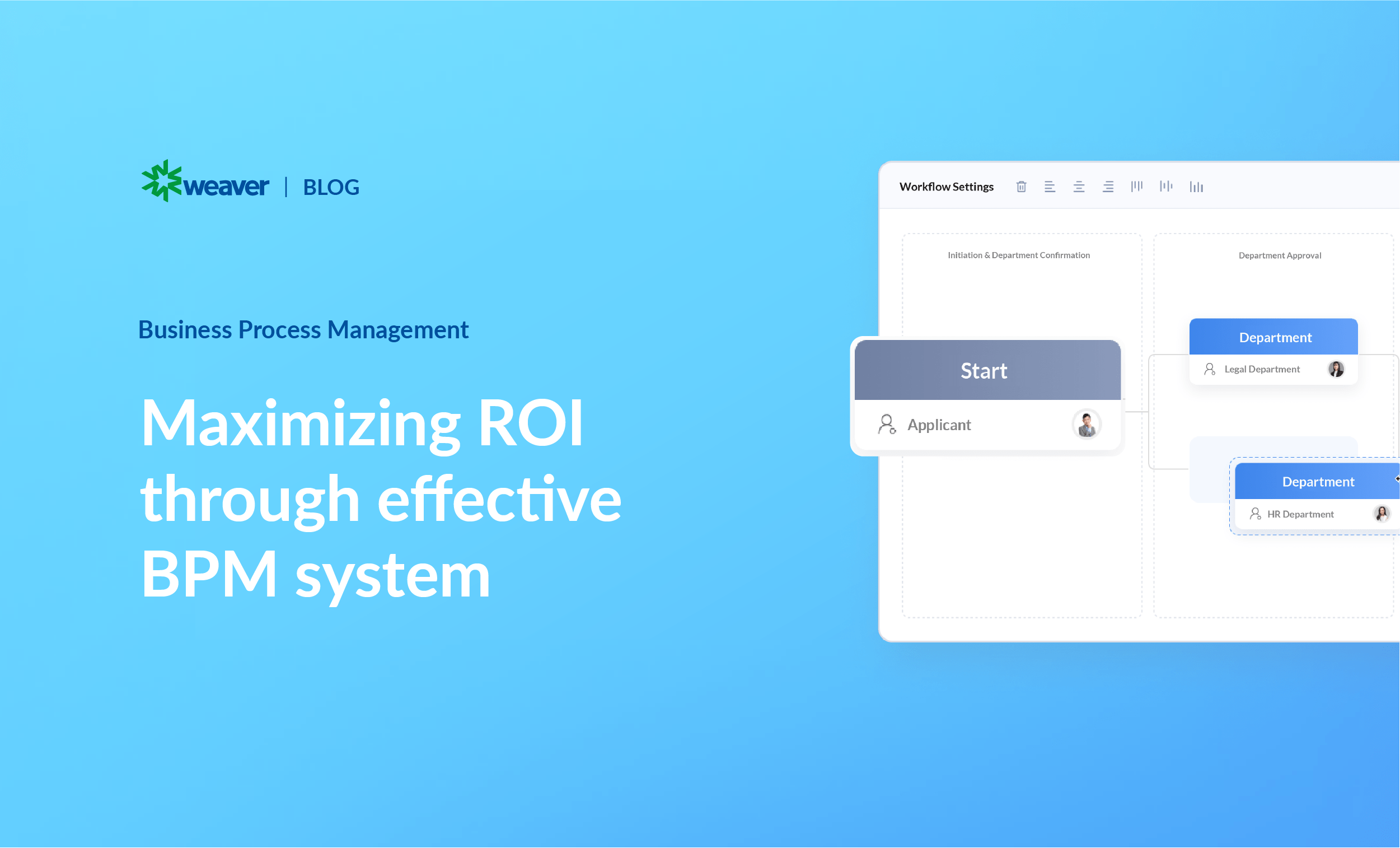
In today’s competitive environment, organisations are constantly looking for ways to improve efficiency and generate better returns. For many, Business Process Management (BPM) system has become a key tool in achieving this goal. However, measuring the true return on investment (ROI) of BPM initiatives can be challenging, especially when organisations focus on optimisation without fully understanding their current processes.
Extended reading: A Guide to Business Process Management
A significant number of organisations around the world are using process mining tools and many more are exploring their use, highlighting the growing emphasis on how BPM system can deliver tangible ROI. However, many organisations find it difficult to measure their return on investment, leading senior management to sometimes question the effectiveness of BPM. This scepticism can, in some cases, lead organisations to divert resources away from process management in favour of other approaches.
The key to realising the full potential of BPM system is to have a clear understanding of how your processes really work. Without this clarity, you may miss out on the immediate benefits of identifying inefficiencies or gaps in your operations. The truth is, you can’t optimise what you don’t fully understand. This is where process mining and process discovery come in, providing the visibility needed to maximise the value of BPM.
Revealing actual workflows: A bias-free approach
The first step to effective business process management is to understand your current workflows. Process mining enables organisations to dig into their digital business systems and extract an unbiased record of when and what happens in their processes.
It’s easy to make assumptions about how a process works, but the reality may be different. Employees often develop their own ways of performing tasks, leading to variations that go unnoticed. To combat this, it’s vital to have a fact-based, transparent view of your processes – one that eliminates bias.
Process mining achieves this by collecting data from your existing systems, creating a real-world history of your workflows. Many organisations supplement this data with interviews and other information-gathering methods to build an accurate picture of how their processes really work.
Extended reading: Streamlined BPM: Integrating Goals, Processes, and Management
Potential ROI advantage
By eliminating blind spots caused by assumptions and biases, your team can identify non-ideal outcomes and use them as indicators of deeper organisational issues. For example, a bank might discover that its onboarding process requires a lot of time spent answering repetitive questions. Process mining could reveal how often these questions are asked, leading to the creation of a high ROI online support knowledge portal.
This data-driven approach allows you to present concrete evidence to management that inefficiencies are leading to lost time and higher costs. In turn, management can make informed decisions to implement changes that improve workflow efficiency and reduce operational costs.
Streamline compliance through process monitoring
Compliance is a critical concern for many organisations, especially those in highly regulated industries. Keeping your processes clean, documented and predictable is key to maintaining compliance and avoiding costly penalties. However, many teams approach compliance as an afterthought, scrambling to prepare for audits rather than embedding compliance into their daily operations.
Business process management can help change this mindset by providing a structured approach to compliance. By uncovering hidden inefficiencies and standardising workflows, BPM system makes it easier for teams to meet regulatory requirements and avoid last-minute audit preparation.
Potential ROI advantage
By maintaining clean and documented workflows, your organisation can avoid fines and protect its reputation. With process mining and discovery tools, you can log all activities without requiring additional effort from your staff, simplifying compliance reporting.
This proactive approach to compliance not only reduces the risk of fines, but also enhances your organisation’s reputation. In today’s business environment, where trust and transparency are highly valued, a strong compliance record can set your organisation apart from the competition.
Identify workarounds and irregularities
While process mining reveals what happens in your processes, process discovery goes a step further by providing context for how these events occur. This distinction is important because it’s not enough to know when tasks are completed – you need to understand how people navigate systems to achieve results.
For example, process mining might reveal that accounts payable regularly enters invoice details into a system, but process discovery can log every keystroke and mouse click involved in completing the task. This level of detail allows you to see where employees may be deviating from standard procedures or using workarounds.
Potential ROI advantage
Process discovery allows you to identify rare, costly deviations that might otherwise go unnoticed. By combining process mining and process discovery, you can gain a comprehensive understanding of your workflows, allowing you to address inefficiencies and improve overall performance.
For example, if employees frequently bypass certain steps in a process, this could indicate a need for process redesign or additional training. Addressing these issues early can prevent costly mistakes down the line and ensure that your processes run as smoothly and efficiently as possible.
Mitigating hidden risks for greater resilience
Effective risk management is critical to maintaining consistent quality and reducing the impact of disruptions. However, managing risk becomes more challenging as organisations grow and teams become globally dispersed. Often, irregularities and inefficiencies don’t become apparent until they result in significant costs.
Business Process Management (BPM) provides organisations with the tools they need to identify and address these hidden risks before they become major problems. With process mining and discovery, you can monitor fluctuations in quality and performance, allowing you to intervene early and prevent costly disruptions.
Potential ROI advantage
By identifying and addressing inefficiencies in your operations, you can create a more resilient organisation. BPM system enables you to maintain more stable workflows, which can lead to long-term cost savings and improved operational performance.
In addition, proactive risk management helps your organisation to be prepared for unexpected disruptions. Whether it’s a supply chain issue, a regulatory change or a sudden market shift, having consistent, well-managed processes in place will enable you to overcome challenges with minimal impact.
Achieving agility through standardisation and automation
One of the ultimate goals of business process management is to standardise workflows so that they can be more easily automated. Automation is a key driver of efficiency, allowing organisations to scale their operations and reduce the need for manual intervention. However, automation relies on standardised processes to work effectively.
Without a clear understanding of your workflows, it’s easy to overlook important steps or include inefficient workarounds in your automation efforts. Process mining and discovery provides the visibility needed to standardise processes across your organisation, ensuring that automation is applied consistently and effectively.
Potential ROI advantage
By standardising processes, you can scale automation efforts and improve agility. Whether your organisation is pursuing incremental digital transformation or aiming for full-scale automation, standardised workflows are the foundation for success.
Automation also enables your organisation to respond more quickly to changes in the market or internal priorities. By reducing reliance on manual processes, you can reallocate resources to higher-value tasks and drive efficiencies across the board.
Unlocking the full ROI potential of business process management system
Maximising the ROI of your BPM efforts requires visibility into every aspect of your processes. By using process mining and discovery tools, you can uncover inefficiencies, address compliance issues, mitigate risk and prepare for automation. With this insight, you’ll be better equipped to make informed decisions about process optimisation and improvement.
Ultimately, the key to BPM success is truly understanding your processes as they are, not as you assume they are. By eliminating bias and gaining full visibility, you can improve your BPM initiatives and achieve meaningful ROI. Take the next step towards long-term success by booking a free demo of our BPM solution today.
Read also:
- How AI is used in Business Process Management
- Document Management Systems: Definition, Challenges & Outlook
- Why is Document Management System (DMS) important?
- Key Factors in Choosing a Document Management System
- How OA Systems Enhance Organisational Roles Across the Board
- Gear Linkage Model: Design Concept and Application Explained