Why Do Companies Need A Document Management System?

Managing documents can be overwhelming, but a document management system (DMS) streamlines organisation, ensures compliance, enhances security and improves efficiency. Learn how a DMS can protect against data loss and support better decision making. Find the right solution for your organisation today.

5 Reasons why companies implement DMS

1. Managing large volumes of data

2. Ensure compliance

3. Faster decision making

4. Protect against data loss and disaster

5. Enhanced security

Choosing the right Document Management System

Identify your needs

Backup and recovery features

Choose a trusted vendor

Administrative control options

User-friendly interface

Strong security measures

Seamless integration with other tools

Document input from multiple sources

Collaboration features

Conclusion

More blog posts

AI

Empowering Learning & Assessment with an AI E-Learning Platform: Introducing the Intelligent “Learn-Practice-Test” Solution

In an era when organizations face rapidly evolving business demands, agile workforce development is no longer optional — it is essential. Training, assessment, and skills validation must move beyond spreadsheets and paper-based processes, and embrace digital, intelligent, continuous models. At Weaver, we’re excited to introduce our next-generation AI e-learning platform, built to transform how companies enable, engage and evaluate their people. Today we spotlight the platform you may know as Weaver Intelligent Learning-Training-Assessment Platform, developed by Weaver. This solution embodies the future of corporate learning: one where learning (study) + practice (drill) + test (assessment) converge in an intelligent, integrated cycle. By leveraging AI, low-code design and a full end-to-end architecture, organisations can create a high-velocity learning culture that scales. In this post we’ll explore: Why modern organisations need an AI e-learning platform The key challenges in traditional training and assessment How the Weaver e-learning platform addresses those challenges via its architecture and features Real-world application scenarios and ROI-driving benefits Best practices for implementation and tips for success Why organizations now require an AI e-learning platform Training used to be episodic: a lecture, a workbook, an end-of-course quiz. But the pace of business has changed. Consider the following forces: 1. Rapid change in business, roles and skills Markets move faster, products and services evolve, and roles require constant upskilling. Traditional annual training cycles are too slow. Employees need to learn on-demand, refine skills continuously, and demonstrate competency in real time. 2. Learner expectations and mobile access Today’s workforce expects learning to be accessible anytime, anywhere, often via mobile or fragmented intervals (commute time, short breaks). The model of “sit down for a class” no longer suffices; what’s required is micro-learning, embedded practice, and adaptive testing. 3. Manual assessment limitations When training and assessment rely heavily on manual processes (instructors prepping questions, manually marking tests, collating results) the system becomes a bottleneck. Slow feedback, low agility and high effort reduce the impact of training programmes. 4. Need for fairness, transparency & data-driven insight As organisations roll out remote training, they must ensure assessment integrity (cheating, impersonation, inconsistent standards). Equally, they need to link learning outcomes with business data (performance, KPIs) and make decisions based on analytics rather than gut feel. 5. Integration with business systems and scalability Learning doesn’t happen in a vacuum. It must tie into HR systems, performance management, knowledge management and business processes. Without integration and scalability (cloud, low-code, multi-tenant) the training stack becomes siloed and expensive. Because of those pressures, organisations are seeking platforms that go beyond standard LMS (Learning Management Systems). They want truly intelligent AI e-learning platforms that integrate learning, practice and assessment – continuously, flexibly and at scale. Key challenges in traditional training and assessment Let’s unpack some of the most common pain-points that organisations face in training and assessment — and why they hamper performance. Challenge 1: Heavy manual workload for tests and assessments Crafting and updating question banks, manually building exams, organising logistics — all this takes time and effort. Marking and analysing results consumes instructor/administrator time. Because of the workload, organisations often delay assessments or reduce frequency, limiting learning reinforcement. Challenge 2: Disconnect between training content and actual business knowledge Many organisations rely on generic courseware or static materials not tightly linked to current business operations, roles or product knowledge. Out-of-date content reduces relevance and engagement. When the knowledge doesn’t reflect what people need on the job, training loses impact. Challenge 3: Passive, low-engagement learner experience Long, lecture-style sessions can feel disconnected. Without interactive practice, learners struggle to internalise concepts. Mobile or micro-formats may be limited or hard to build. The result: low completion rates, shallow learning and minimal behaviour change. Challenge 4: Assessment fairness, integrity and feedback delays Remote or online exams pose risks of cheating, impersonation or simply lack of oversight. Manual processes mean results and feedback may not be timely, reducing the motivational payoff. Organisations may struggle to derive meaningful analytics from assessment data. Challenge 5: Low visibility into learning effect and ROI Without real-time dashboards or integrated analytics, learning teams cannot readily show impact to management. Learning outcomes remain disconnected from HR, business or performance systems. Measuring ROI remains elusive, making it hard to invest in continuous improvements. Challenge 6: Lack of flexibility and scalability Customising learning and assessment for different roles, regions or languages often requires heavy development work. Siloed systems for different departments proliferate, driving up cost and complexity. Deployments may struggle with cloud, multi-tenant or enterprise-scale demands. In summary: To meet evolving requirements and deliver real business value, organisations need an AI e-learning platform that addresses all these challenges. How Weaver e-learning delivers a full-cycle AI e-learning platform Now let’s dive into how the Weaver AI e-learning is architected to meet the challenge head-on — bringing together learning, practice and assessment into a unified intelligent cycle. Platform overview The platform is described as smart learning-training-exam platform). It promises learn anytime, practice anytime, test anytime and full AI-enabled automation: automatic test generation, automatic marking, proctoring & anti-cheating) for every learner. Core pillars and features 1. AI-powered learning The platform supplies AI knowledge extraction, AI video segments, AI narrated transcripts/subtitles, enabling learners to digest content more efficiently. It supports multi-format content: video, PDF, PPT, Word, etc., and even “embedded quiz” points in video playback — i.e., you must answer a question to proceed. Knowledge maps: The system auto-generates knowledge maps based on AI-tagged documents (e.g., sales knowledge map, product knowledge map, role-skills map) so learners can see a structure of what they need to know. Daily push/ micro-learning: Learners can receive “daily question” or micro-push tasks, which keeps learning consistent rather than episodic. 2. Intelligent practice The platform supports smart drill/brush questions: learners can do daily tasks, select tasks manually, or use AI-driven selection of questions based on their role and performance. Built-in wrong-question station where incorrect questions are collected, categorised and tied back to explanation/knowledge points. 3. Intelligent assessment Full test management: question bank, automated test creation, randomised question ordering (one-person one-paper) for fairness. Proctoring & anti-cheating: The system supports face recognition, liveness detection, random identity checks, prevention of cut-screen, clipboard blocking, automatic submission when violations occur, time stamping and paper sealing. Automatic marking & scoring: AI auto-grades, instant feedback, analytics on results, error analysis. 4. Integration & low-code flexibility The platform uses a low-code development base, enabling organisations to customise learning/assessment scenarios (recruitment exam, new-employee training, certification exam, annual assessment) without heavy coding. It integrates with HR, knowledge management, performance/OKR systems. Training outcomes link to business metrics. Deployment flexibility: public cloud, private cloud, hybrid; multi-tenant architecture; 5. Analytics-driven visibility Data dashboards: organisation-level, learner-level, exam-level; shows training status, exam distributions, learner progress, etc. Analytics on question banks (usage, difficulty, error rate) to continuously optimise content. Why this platform qualifies as an “AI e-learning platform” Given the integration of AI course content generation, AI tutoring/assistant , AI assessment, and intelligent proctoring, this solution truly warrants the descriptor AI e-learning platform. The emphasised keyword here — “AI e-learning platform” — is central: it’s not just an LMS but one infused with artificial intelligence to automate, personalise and overlay real-time insight. Business value & application scenarios Let’s look at where the platform generates real value — specific scenarios and the benefits organisations gain. Scenario 1: New-employee onboarding and acceleration Organisations hiring large cohorts face the challenge of getting new hires up to speed quickly and consistently. With the platform: Learning path generation: The system can push role-specific modules automatically to new hires (sales, engineering, service). Embedded practice: Micro-learning and drills ensure learning isn’t passive. Assessment automation: New hires can be tested quickly with auto-generated exams; results feed back into onboarding dashboards. Analytics/Tracking: HR and L&D can monitor who is falling behind, and intervene. Scenario 2: Multi-level role & competency assessment In organisations with many roles/levels (junior → mid → senior, specialist vs generalist), you need to ensure people have the right skills for promotion or role change. The AI platform supports: Role-tagged question banks (type/complexity aligned to role). Dynamic test generation: candidate’s experience, role and competency are factored in. Smart analytics: which skills are weak across populations; which competencies need reinforcement. Scenario 3: Certification/Compliance & Remote Examination For organisations subject to compliance training (e.g., banks, manufacturing, healthcare) the platform offers: Trusted identity and exam integrity (face recognition, anti-cheat enforcement). One-person one-paper test generation. Certificates with digital signature, online verification. (E.g., certificate check system) Remote or hybrid exam delivery without sacrificing fairness. Scenario 4: Knowledge-refresh, micro-learning, ongoing development Skill decay is real. Organisations need to keep employees current as products, market conditions or regulations change. The AI e-learning platform enables: Daily/weekly micro-questions or “knowledge push” to employees. Analytics on error trends: e.g., what questions most employees miss? Build refresher modules. Linking learning to performance: e.g., reps missing product knowledge flagged for “re-learn”. Scenario 5: Organisational learning linked to business metrics Because the platform integrates with business systems (HR, OKR, knowledge management), organisations can: Link training outcomes to business results (sales performance, quality metrics). Use analytics to optimise training investments (identify modules with little effect, shift focus). Build dashboards for leadership: what’s the state of competency across the org? Value summary Efficiency: Automated exam generation, marking reduces admin overhead. Engagement: AI-enabled micro-learning, embedded drills and mobile access increase participation and retention. Fairness & Integrity: Proctoring and smart test mechanisms drive trust in assessments. Insight & Action: Analytics turn data into actionable insights for L&D. Scalability & Flexibility: Low-code architecture and cloud/tenant support permit rapid deployment and adaptation. Implementation & best-practice advice Rolling out an AI e-learning platform is more than installing software — it requires change management, integration and alignment with organisational strategy. Here are key tips: 1. Define clear learning & business objectives Begin by asking: What skills do we need now and next? Which roles demand upskilling? What business metrics (sales, quality, compliance) will this support? Aligning training with business outcomes yields higher ROI. 2. Build a knowledge map and role-based taxonomy Use the platform’s ability to generate knowledge maps: tag content by role, competency, business function. This provides the structure for learning paths, practice drills and assessment alignment. 3. Ensure content relevance and freshness Even with AI assistance, you’ll need to curate or upload role-specific content (videos, docs). Use the platform’s AI-enabled features (knowledge extraction, video clip segments) to accelerate content creation and keep it current. 4. Seed a robust question bank & automate test/quiz workflows One of the biggest wins of an AI e-learning platform is automation of testing. But it starts with a well-tagged question bank: by role, difficulty, type. Then enable randomised test generation, practise drills and instant feedback loops. 5. Promote mobile & micro-learning formats Encourage learning in smaller time-slices—daily questions, quizzes, short modules. This increases uptake, especially among busy professionals. Mobile-access and multi-format content (video, interactive, Q&A) help. 6. Link assessments to learning and business outcomes Don’t treat tests as standalone events. Use assessment data to feed back into learning paths (e.g., if many fail a topic, assign refresher), and tie results into HR/performance systems. Show the chain: training → test/performance → business result. 7. Uphold assessment integrity and governance Set up the proctoring/monitoring features properly: identity checks, screen behaviour, one-person one-paper. Provide transparency to reassure stakeholders (learners don’t feel spied on, but fairness is maintained). 8. Leverage analytics for continuous improvement Use dashboards to monitor participation, completion, drill performance, exam trends, error patterns. Ask: Where are the knowledge gaps? Which content is under-performing? Iterate and refine. 9. Communicate & drive engagement Learning culture matters. Launch campaigns, highlight achievements, gamify (points, leaderboards, certificates). Use the platform’s built-in points management and ranking list features to boost engagement. 10. Scale smartly and integrate systems Finally, ensure the platform is integrated with HR/MIS/knowledge systems so data flows seamlessly. Use low-code interface to build new scenarios (e.g., certification, knowledge-contest, role change assessment). Ensure your infrastructure supports multi-tenant or hybrid deployment if necessary. Summary: Embracing the Future of Learning The nature of work, roles and learning has changed. Organisations must move from periodic training events to continuous, adaptive, data-driven learning and assessment. That shift demands an AI e-learning platform — one that unifies learning, practice and testing in an intelligent cycle, and connects outcomes to business value. When implemented with clear objectives, role-based content taxonomy, mobile access, assessment integrity and analytics governance, your organisation can: Increase training efficiency and reduce administrative overhead Boost learner engagement and knowledge retention Ensure fair, transparent, scalable assessments Link learning outcomes with business performance Build a culture of continuous learning and skills development In short: if you’re looking to future-proof your learning and assessment environment, an AI e-learning platform of this nature is no longer optional — it’s a strategic lever. If you’re ready to explore how Weaver’s AI e-learning platform can transform your organisation’s learning and assessment ecosystem, we invite you to schedule a demo or sign up for a free trial. Let’s talk about your learning objectives, your skills-map framework and how we can deploy a smart “learn-practice-test” cycle tailored to your business.

BPM

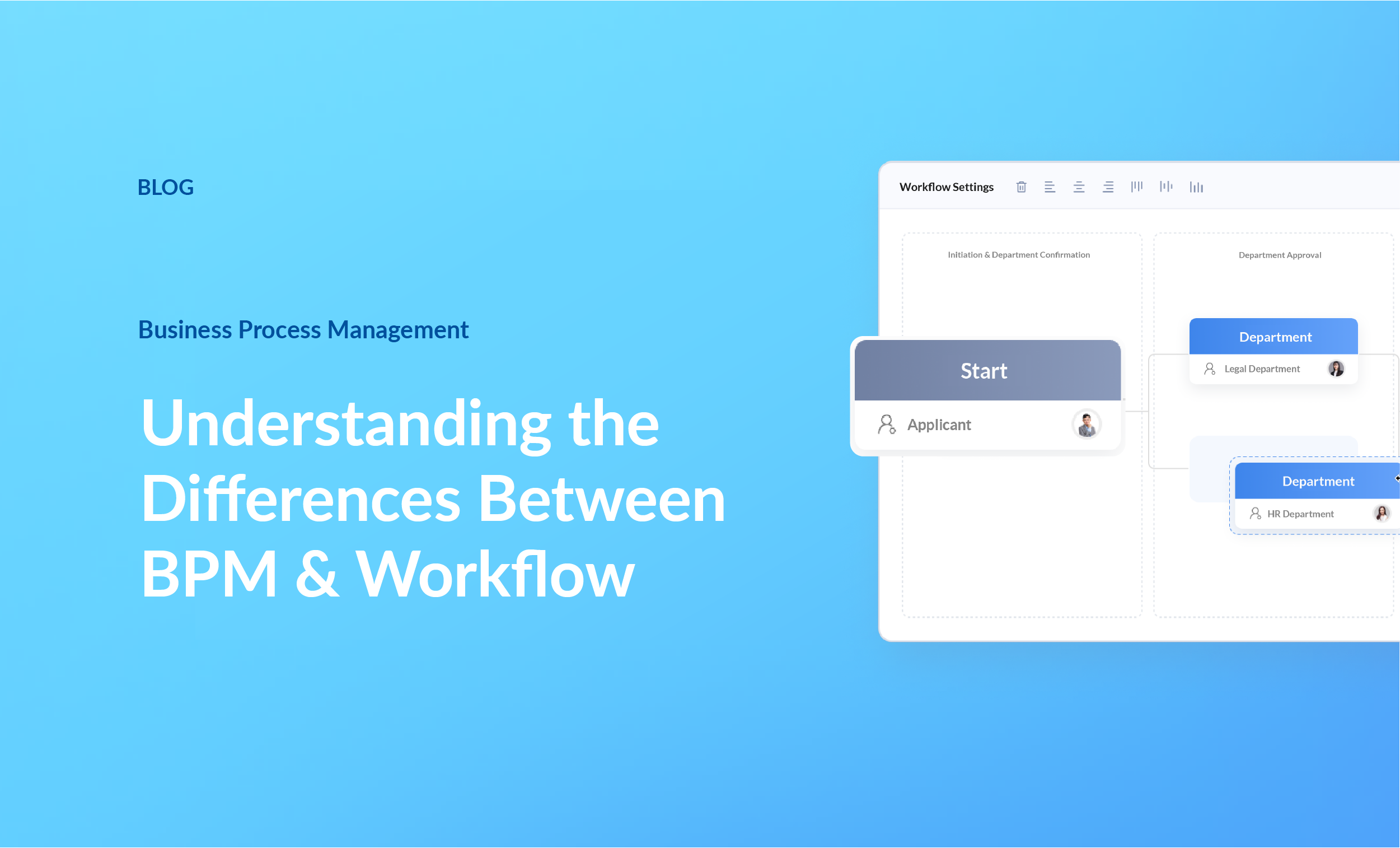
Understanding the Differences Between BPM and Workflow

Many people confuse Business Process Management (BPM) with workflow management, but they serve different purposes. BPM optimises entire business processes, while workflow management focuses on the execution of individual tasks. Learn how these two strategies complement each other, and why companies need both for efficiency and growth.

e-cology

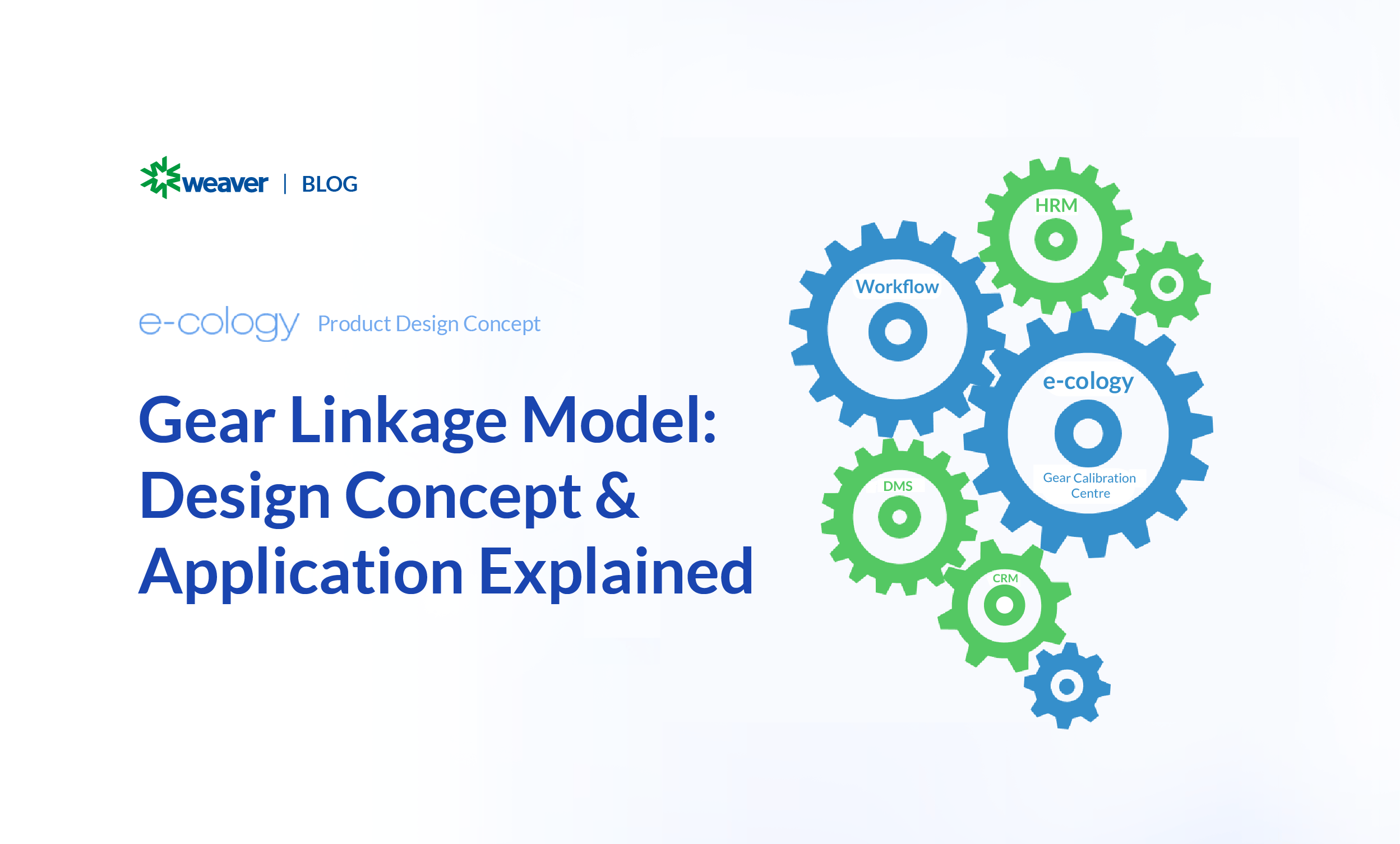
Gear Linkage Model: Design Concept and Application Explained

Gear Linkage Model illustrates how the movement of one module drives others, thereby improving functionality and overall system integration in Weaver e-cology.

View All Blogs

Experience the new intelligent way of working with Weaver

Get your tailored demo solutions today.